
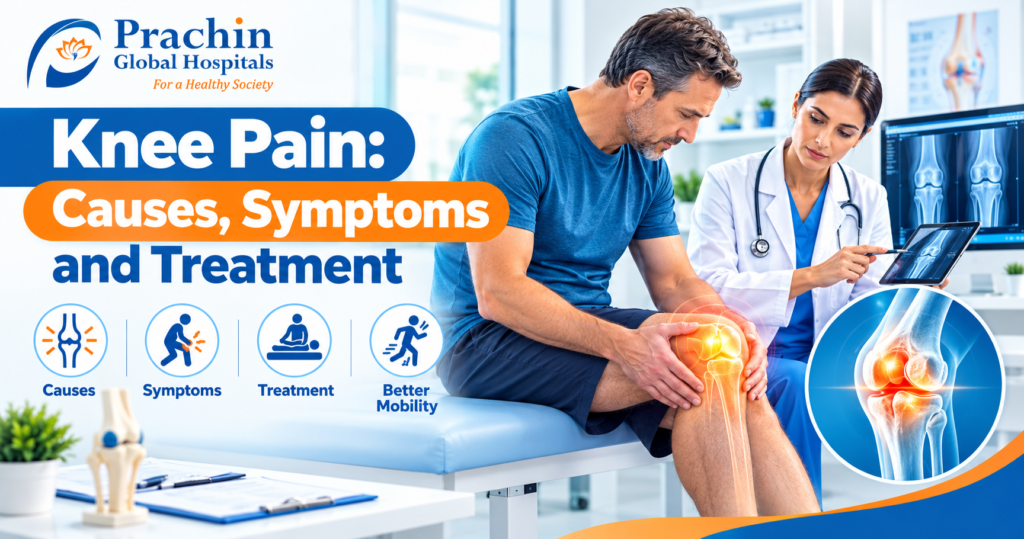



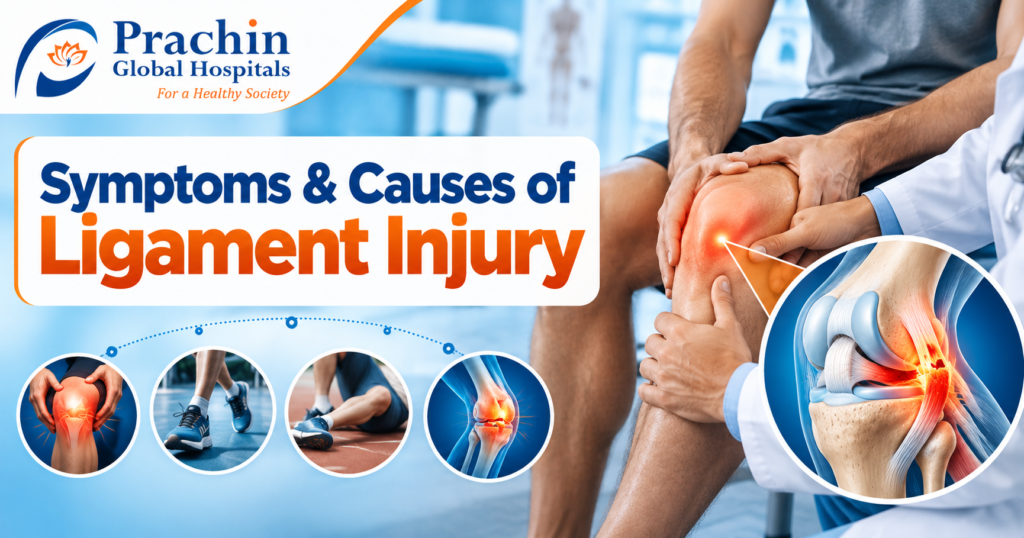

Few things disrupt daily life quite like Knee Pain. A simple walk to the market, climbing a flight of stairs, or even sitting cross-legged for a meal can become a struggle when your knees start acting up. The knee joint carries an enormous amount of responsibility, supporting body weight while enabling movement in almost every direction, and this constant demand makes it one of the most injury-prone joints in the body. At Prachin Global Hospital, our orthopaedic team regularly sees patients across all age groups dealing with Knee Pain, and we believe that understanding the condition is the first step toward overcoming it.
This guide walks you through why Knee Pain happens, how to recognize it early, and what treatment paths are available today.
Knee Pain rarely has a single, simple explanation. It can develop suddenly after an injury or build up gradually over months or years due to repetitive strain. Some of the most frequent triggers our specialists encounter include:
Because the causes vary so widely, self-diagnosing Knee Pain is rarely reliable. A consultation with our Orthopaedics and Joint Replacement Department helps pinpoint exactly what’s driving your discomfort.
Not all Knee Pain is created equal. Some discomfort fades on its own with rest, while other cases signal a deeper problem that requires medical intervention. Watch for these indicators:
Sudden, severe pain accompanied by an inability to put weight on the leg, or a visibly deformed joint, calls for urgent medical care. Even milder but recurring symptoms deserve a proper evaluation, since delaying treatment often allows minor issues to progress into more complex conditions.
Getting the treatment right starts with the right diagnosis. Our orthopaedic specialists combine hands-on clinical assessment with modern diagnostic imaging to build a complete picture of your knee health.
This layered approach means we rarely treat Knee Pain as a one-size-fits-all problem. Instead, every treatment plan is built around what’s actually happening inside your joint.
Not every case of Knee Pain requires an operation. Many patients find significant relief through non-surgical approaches, while others benefit from surgical correction when the damage is more extensive.
When conservative care isn’t enough, our surgical team offers minimally invasive Arthroscopy to repair torn ligaments or cartilage with faster recovery times, as well as Total Knee Replacement Surgery for patients facing advanced joint degeneration. Explore our full surgical capabilities on our page dedicated to the Best Orthopaedics and Joint Replacement Hospital in Patancheru.
Joint health is also closely tied to broader wellness. Patients managing conditions like hypertension often find it helpful to review our blog on High Blood Pressure: Causes, Symptoms & Treatment, since cardiovascular health can influence recovery and mobility after orthopaedic procedures.
Prevention is far easier than treatment, and small lifestyle adjustments can meaningfully lower your risk of developing Knee Pain over time.
Knee Pain affects everyone differently, which is why our orthopaedic team at Prachin Global Hospital takes a personalized approach to every case. From the first consultation through diagnosis, treatment, and rehabilitation, our specialists combine clinical expertise with advanced surgical technology, including minimally invasive Arthroscopy and precision Joint Replacement procedures. We focus not just on easing pain in the moment, but on helping patients rebuild strength and confidence in their movement for the long run.
You don’t have to accept Knee Pain as a permanent part of your routine. Whether it’s a nagging ache after exercise or a long-standing joint condition limiting your mobility, our orthopaedic specialists at Prachin Global Hospital are ready to help you find real, lasting relief.
Contact us today to book a consultation and take the first confident step toward healthier, pain-free knees.
Common triggers are explained in our Knee Pain: Causes, Symptoms, and Treatment Guide, covering arthritis, injuries, and overuse.
If discomfort persists, our Knee Pain: Causes, Symptoms, and Treatment Guide helps you recognize warning signs needing medical attention.
Yes, our Knee Pain: Causes, Symptoms, and Treatment Guide outlines non-surgical options like physiotherapy, medication, and lifestyle changes.
Our Knee Pain: Causes, Symptoms, and Treatment Guide explains when conservative care fails and surgical options become necessary.
Mild stiffness can occur, but our Knee Pain: Causes, Symptoms, and Treatment Guide explains when it signals a deeper joint problem.
WhatsApp us