
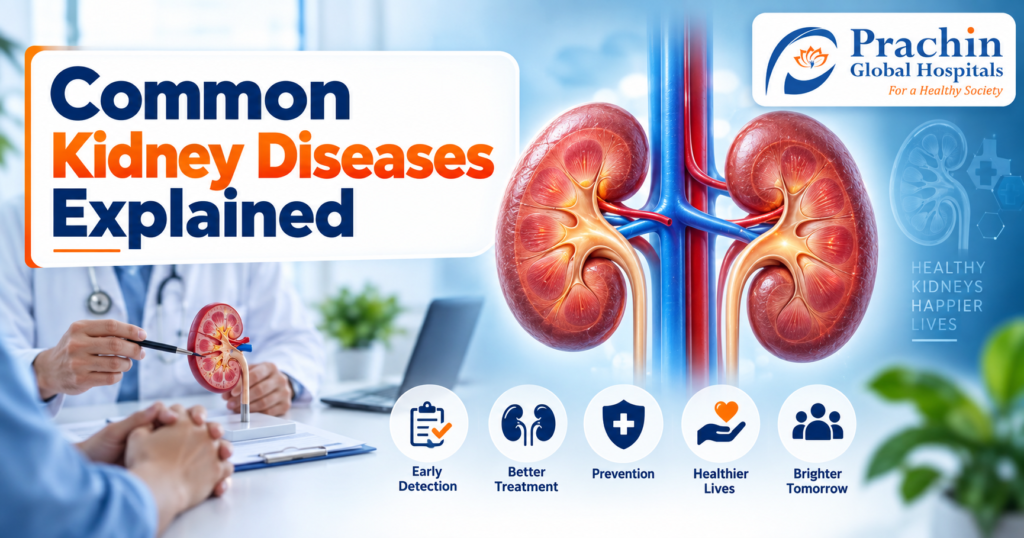







Kidneys are two of the hardest-working organs in the human body, silently filtering waste, balancing fluids, and regulating blood pressure around the clock. Yet kidney health is often overlooked until a problem becomes serious. Understanding common kidney diseases early can make the difference between simple management and complex, long-term treatment. At Prachin Global Hospital, our team of expert nephrologists is committed to helping patients recognize warning signs early and access timely, effective care. In this guide, we break down the most common kidney diseases, their causes, symptoms, and treatment options, so you can take proactive steps toward better kidney health.
Kidney disease refers to any condition that damages the kidneys and reduces their ability to filter blood effectively. When kidneys are damaged, waste products and fluids can build up in the body, leading to a range of health complications. Kidney disease can be acute (sudden and often reversible) or chronic (gradual and long-term), and its severity can range from mild dysfunction to complete kidney failure requiring dialysis or transplantation.
Early detection through regular checkups is key, especially for individuals with diabetes, high blood pressure, or a family history of kidney problems. If you’re concerned about your kidney health, our Best Super Speciality Hospital in Patancheru offers comprehensive diagnostic and nephrology services under one roof.
Chronic Kidney Disease is a progressive condition where the kidneys gradually lose their ability to function over months or years. It is often caused by underlying conditions such as diabetes and hypertension.
Common Symptoms:
CKD is typically diagnosed through blood tests (checking creatinine and eGFR levels) and urine tests. Since high blood pressure is a leading cause of CKD, managing it effectively is essential. Learn more about related risk factors in our blog post, “High Blood Pressure: Causes, Symptoms & Treatment.“
Kidney stones are hard mineral and salt deposits that form inside the kidneys. They vary in size; small stones may pass unnoticed, while larger stones can cause severe pain and complications.
Common Symptoms:
Dietary habits, dehydration, and certain medical conditions increase the risk of stone formation. For a detailed breakdown of causes and treatment options, read our blog on Kidney Stone Symptoms and Treatment.
When a urinary tract infection spreads to the kidneys, it becomes a kidney infection, or pyelonephritis. This condition requires prompt medical attention to prevent kidney damage.
Common Symptoms:
Left untreated, kidney infections can lead to permanent kidney damage or sepsis, making early diagnosis and antibiotic treatment critical.
Polycystic Kidney Disease is a genetic disorder that causes fluid-filled cysts to develop in the kidneys, gradually enlarging them and impairing function over time.
Common Symptoms:
Since PKD is hereditary, individuals with a family history should undergo regular screening to monitor kidney function and manage symptoms proactively.
Several factors contribute to the development of kidney diseases, including:
Understanding these risk factors allows individuals to make lifestyle changes that protect long-term kidney health.
Diagnosing kidney disease typically involves a combination of:
Treatment depends on the specific condition and its severity, ranging from lifestyle and dietary changes, medications to control blood pressure and blood sugar, to advanced interventions like dialysis or kidney transplantation for severe cases. At Prachin Global Hospital, our nephrology team creates personalized treatment plans based on each patient’s unique diagnosis and health goals.
Protecting your kidneys doesn’t require drastic measures – small, consistent habits go a long way:
A strong immune system also supports overall organ health. Explore our tips in Best Immunity-Boosting Foods to complement your kidney-friendly lifestyle.
Your kidney health deserves expert attention. Whether you’re experiencing early symptoms or managing a diagnosed condition, the nephrology specialists at Prachin Global Hospital are here to guide you every step of the way with advanced diagnostics and compassionate care.
Book a consultation today and take the first step toward healthier kidneys. Call us or visit Prachin Global Hospital in Patancheru to schedule your appointment now.
Common Kidney Diseases Explained can help identify signs such as swelling, changes in urination, fatigue, nausea, and persistent back or side pain.
Common Kidney Diseases Explained covers conditions such as kidney stones, infections, chronic kidney disease, and polycystic kidney disease.
Common Kidney Diseases Explained highlights the importance of blood tests, urine tests, blood pressure checks, and regular medical evaluations for early detection.
Common Kidney Diseases Explained discusses risk factors including diabetes, high blood pressure, obesity, family history, smoking, and certain medications.
Common Kidney Diseases Explained recommends medical evaluation for persistent swelling, blood in urine, reduced urination, abnormal tests, or recurring kidney problems.
WhatsApp us