






A sudden fever, a pounding headache, and a body that aches from head to toe: it is easy to dismiss these as a passing viral infection. But when mosquitoes are active, these same signs can point to dengue. If you have been wondering, “What Are The Early Symptoms Of Dengue?”, knowing the answer could help you act before the illness becomes serious.
At Prachin Global Hospital, our doctors in Patancheru see many families who delayed testing because the first symptoms looked ordinary. This guide walks you through the earliest signs of dengue, the red flags that demand urgent care, how doctors confirm the infection, and the steps that keep your home safe.
Dengue is caused by a virus carried by the Aedes mosquito. This mosquito is easy to recognise by the white stripes on its legs, and it bites mainly during daylight hours. It lays eggs in clean, standing water: coolers, overhead tank covers, flower pots, old tyres, buckets and even bottle caps after a shower.
Once an infected mosquito bites you, the virus multiplies silently in your body for four to ten days before symptoms show up. Dengue cannot be caught by touching or being near a patient. The virus moves only through mosquito bites, which is why cases often cluster in the same lane or apartment block.
Four different types of the virus exist. After recovering from one, you are protected only against that type. A later infection with another type can sometimes be more severe, so past dengue should never make you complacent.
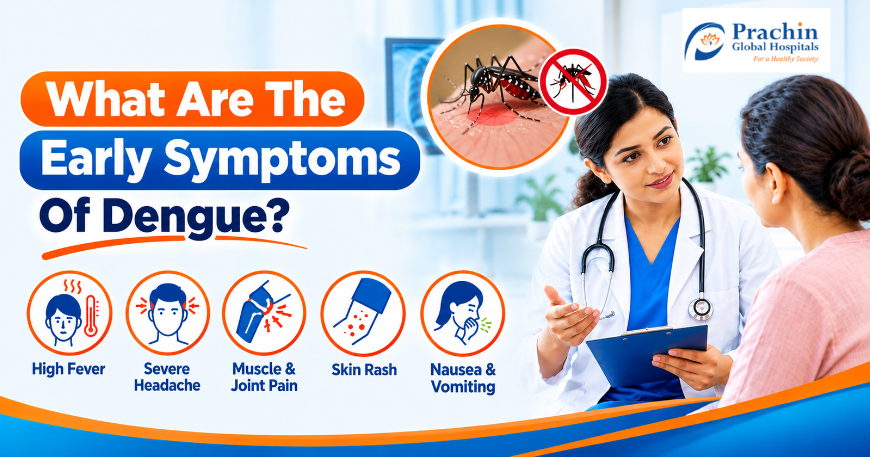
The first signs can arrive suddenly, often within a single day. Watch for the following early dengue symptoms:
A fever that jumps quickly to 103°F or above is the hallmark. It may arrive with chills and tends to last between two and seven days. When a high fever appears out of nowhere during mosquito season, treat it as a reason to get checked, not just to take a tablet and wait.
Many patients describe a heavy ache across the forehead and a deep, pressing pain behind the eyeballs. The discomfort often increases when you glance sideways or look at bright light.
Dengue earned the nickname “breakbone fever” because of the intense aching it causes. Your back, knees, elbows and legs may hurt so badly that even sitting up feels exhausting.
Feeling queasy, refusing food and vomiting once or twice are common in the early days. Along with fever, this makes it easy to lose body fluids faster than you realise.
A rash of tiny red spots or flushed patches may show on the chest, arms, legs or face. It often appears a few days after the fever starts and may itch.
Overwhelming tiredness, a feeling of weakness and tender lumps in the neck or groin may also appear. Fatigue can stay with you for weeks after the fever has gone.
Not everyone gets every symptom. Children may show only fever, irritability and loss of interest in play. If two or three of these signs occur together, particularly fever with eye pain and body ache, book a dengue test without delay.
Most patients recover with rest and fluids. A smaller group, however, moves into a more dangerous stage, usually when the fever begins to fall around day three to seven. This is the moment families feel relieved, yet it is exactly when complications can start. Doctors call it the “critical phase.” Rush to a hospital if you notice any of these warning signs:
In severe dengue, the blood vessels may leak fluid, platelets drop and blood pressure can fall dangerously. Hospital monitoring and intravenous fluids at this stage are often life-saving. People at higher risk include young children, pregnant women, senior citizens and those living with diabetes, hypertension, asthma or heart and kidney disease.
Many illnesses, including typhoid, malaria, chikungunya and influenza, look like dengue in the first days. Testing removes the guesswork. Your doctor may advise:
Dengue has no specific antiviral drug. Care is supportive and aims to keep your body strong while it clears the virus:
Please avoid social-media remedies that claim to boost platelets in hours. A falling platelet count usually recovers on its own, and platelet transfusion is needed only in specific situations.
Our General Medicine Department provides fever evaluation and dengue testing for adults, while our Paediatrics Department cares for infants and children with high fever. In emergencies, our 24/7 team stands ready to help.
Breaking the mosquito’s breeding cycle is the most effective protection. Make these habits part of your weekly routine:
Awareness also helps. Teach children to avoid playing near puddles and encourage neighbours to clean their surroundings too. A mosquito-free lane protects every household.
Good nutrition aids recovery, too. Read our guide on Best Immunity-Boosting Foods to learn how a balanced diet supports your body during fever season.
Please consult a doctor if:
Waiting often makes recovery harder. Early testing, rest and hydration prevent most dengue cases from becoming severe.
Prachin Global Hospital is a multi-speciality hospital serving Patancheru, Hyderabad and surrounding communities with patient-first healthcare. For dengue and fever care, we offer:
We believe early awareness saves lives, and no family should have to handle a worrying fever alone.
Is a fever refusing to go away? Do the early symptoms of dengue sound familiar? Do not wait and watch.
Visit Book Your Appointment in Patancheru or call us now to schedule a consultation with our general medicine specialists. Timely testing and the right guidance can keep a simple fever from turning into a serious illness.
The early symptoms of dengue include high fever, headache, pain behind the eyes, body aches, nausea, and skin rash.
The early symptoms of dengue usually appear 4–10 days after an infected mosquito bite.
Yes, the early symptoms of dengue may begin with mild fever, tiredness, and body aches before worsening.
Consult a doctor if you develop fever and suspected dengue symptoms. Severe abdominal pain, bleeding, or persistent vomiting requires urgent medical attention.
Doctors assess the early symptoms of dengue and may recommend blood tests to confirm the infection.
WhatsApp us