
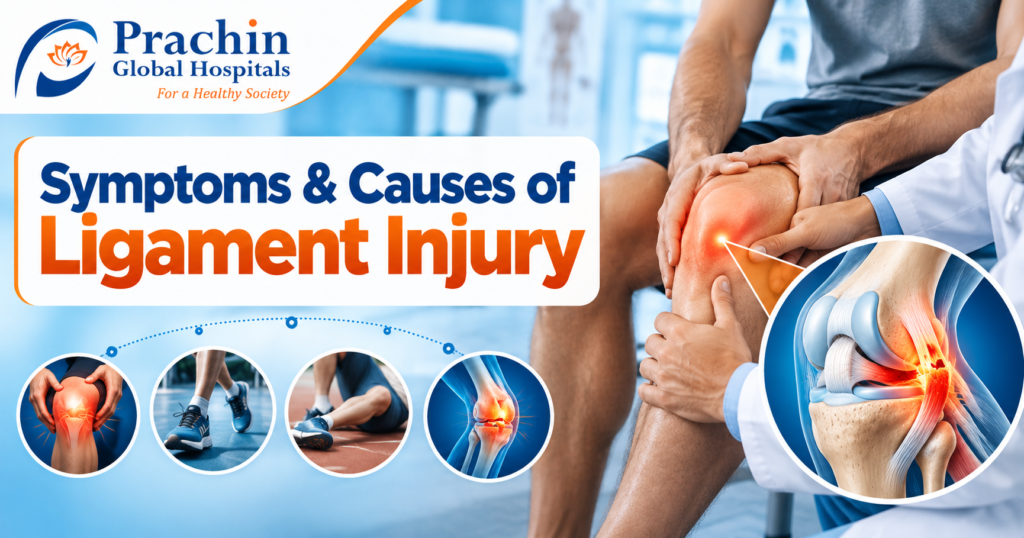








Ligaments are the tough, fibrous bands of tissue that connect one bone to another, holding our joints together and allowing us to move safely and confidently. Whether it’s twisting an ankle during a morning jog, taking an awkward fall, or overexerting a joint during sports, ligament injuries are among the most common musculoskeletal problems people face today. Left untreated, they can lead to chronic instability, recurring pain, and long-term joint damage.
At Prachin Global Hospital, one of the leading centres for orthopaedic and joint care in Patancheru, our specialists frequently treat patients dealing with ligament sprains and tears across the knee, ankle, shoulder, and wrist. Understanding the early symptoms and root causes of ligament injuries can help you seek timely treatment and avoid complications down the line.
A ligament injury, often referred to as a sprain, occurs when the fibrous tissue connecting two bones is stretched beyond its normal range or torn due to sudden force or repetitive strain. Ligament injuries are graded into three categories based on severity:
The knee and ankle are the most commonly affected joints, though ligament injuries can also occur in the wrist, elbow, and shoulder.
Recognising the signs of a ligament injury early can make a significant difference in recovery time. Common symptoms include:
If you experience any combination of these symptoms after an injury, especially instability or a popping sensation, it’s important to consult an orthopaedic specialist promptly rather than waiting for the pain to subside on its own.
Ligament injuries can happen to anyone, from athletes to homemakers, and are typically caused by sudden movements or repeated stress on a joint. Some of the most common causes include:
High-impact sports such as football, basketball, badminton, and running often involve quick direction changes, jumping, and pivoting, all of which place significant stress on ligaments, particularly in the knee (ACL, MCL) and ankle.
A simple misstep on an uneven surface, slipping on a wet floor, or missing a step while climbing stairs can cause the ankle or knee to twist unnaturally, resulting in a sprain or tear.
Lifting heavy objects incorrectly or maintaining poor posture during physical activity can put undue strain on ligaments in the back, shoulder, and knee joints.
Activities that require repeated joint movement, such as certain occupational tasks or repetitive sporting motions, can gradually weaken ligaments over time, making them more prone to injury.
Sudden impact from vehicle accidents is a leading cause of severe ligament tears, particularly in the knee and shoulder, often requiring surgical intervention.
As we age, ligaments naturally lose some of their elasticity and strength, making older adults more susceptible to injuries even from minor incidents.
At Prachin Global Hospital, diagnosis typically begins with a thorough physical examination followed by imaging tests such as X-rays, MRI, or ultrasound to assess the extent of the ligament damage. Based on the grade and location of the injury, our orthopaedic team may recommend:
Our team at the Orthopaedics & Joint Replacement department specialises in both conservative and surgical management of ligament injuries, ensuring patients receive personalised care suited to their activity level and long-term goals.
While not all injuries can be avoided, these simple habits can reduce your risk of ligament damage:
If you’re also managing joint discomfort alongside a ligament concern, our blog on Knee Pain: Causes, Symptoms and Treatment offers additional insight into related joint conditions. And for those balancing recovery with overall wellness, our guide to Best Immunity-Boosting Foods can support the body’s natural healing process.
You should seek medical attention if you notice severe swelling, an inability to bear weight, visible deformity of the joint, or persistent instability even after initial home care. Early diagnosis prevents minor sprains from progressing into chronic joint problems that may eventually require surgery.
Don’t let a ligament injury hold you back from your daily activities. At Prachin Global Hospital, Patancheru, our experienced orthopaedic specialists are equipped with advanced diagnostic tools and treatment options to help you recover quickly and safely. Whether you need a simple consultation or advanced surgical care, we’re here to support your journey to full recovery.
Book your appointment today and take the first step toward stronger, healthier joints. Contact Prachin Global Hospital now to speak with our orthopaedic team.
Pain, swelling, and instability are common symptoms and causes of ligament injury, often occurring after sudden twists or falls.
Sports, sudden pivots, and accidents are frequent symptoms and causes of ligament injury, especially affecting knees and ankles.
Yes, a popping sound is often linked to the symptoms and causes of ligament injury, signaling a possible tear.
Joint instability is a key sign among the symptoms and causes of ligament injury, making the area feel weak or unreliable.
MRI and physical exams help doctors evaluate the symptoms and causes of ligament injury for an accurate diagnosis.
WhatsApp us