
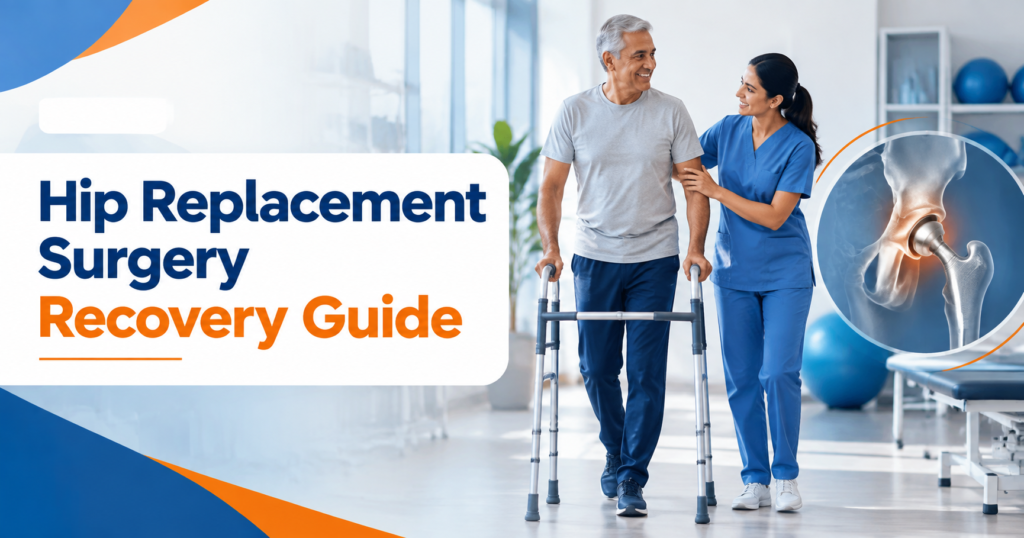









Undergoing Hip Replacement Surgery is a major step toward relieving chronic pain and regaining mobility, but the journey doesn’t end in the operating room. A smooth and successful outcome depends heavily on how well patients navigate the recovery period. This Hip Replacement Surgery Recovery Guide is designed to help patients and their families understand what to expect at every stage, from the moments right after surgery to returning to a normal, active lifestyle. At Prachin Global Hospital, our orthopaedic team walks alongside every patient through this journey, offering expert guidance, advanced rehabilitation support, and compassionate care.
Whether you are preparing for surgery or currently in the recovery phase, this guide will help you set realistic expectations and adopt the right habits for a faster, safer healing process.
The first few days following surgery are focused on stabilizing the patient, managing pain, and initiating early movement to prevent complications like blood clots or stiffness. Most patients spend a few days in the hospital under close observation before being discharged.
Our team at the Orthopaedics and Joint Replacement Department at Prachin Global Hospital closely monitors each patient during this critical window to ensure a safe transition from surgery to home-based recovery.
Understanding the general timeline of Hip Replacement Surgery Recovery can help patients track their progress and stay motivated. While every individual heals at a different pace, here is a general overview.
During this stage, most patients rely on a walker or crutches for support. Swelling and mild pain around the hip are common, and physiotherapy sessions typically begin with gentle range-of-motion exercises.
By this point, many patients transition from a walker to a cane, and daily activities become more manageable. Hip Replacement Surgery Recovery Guide. Physiotherapy intensifies, focusing on strengthening the muscles around the new
Most patients can resume light daily activities, including driving in some cases, once cleared by their surgeon. Strength and flexibility continue to improve steadily during this phase.
By six months, the majority of patients experience significant improvement in mobility and are able to resume most normal activities, including low-impact sports and long walks, with continued strength gains possible for up to a year.
Following the right practices during recovery can make a significant difference in healing time and long-term joint function.
Consistent physiotherapy is one of the most important factors in a successful recovery. Structured exercises help restore strength, flexibility, and range of motion in the new hip joint. Patients are usually guided through a personalized rehabilitation plan by our specialists.
Preparing your home before surgery can prevent falls and complications during recovery. Consider these adjustments:
A Healthy and Balanced Diet rich in protein, calcium, and vitamin D supports tissue repair and bone healing. Hip Replacement Surgery Recovery Guide. Staying hydrated and maintaining a healthy weight also reduces strain on the new joint, supporting long-term joint health.
Mild pain and swelling are normal during recovery, but they should gradually decrease over time. Ice application, prescribed medications, and elevation of the leg can help manage discomfort effectively. If pain worsens or is accompanied by fever, it’s important to consult your surgeon promptly.
Recovery is not always a straight path, and patients may encounter certain challenges along the way.
Patients recovering from joint surgery may also benefit from managing related health conditions during this period. Hip Replacement Surgery Recovery Guide.Our blog on High Blood Pressure: Causes, Symptoms & Treatment offers helpful insights, as maintaining cardiovascular health plays a role in overall surgical recovery. Similarly, understanding joint issues in other areas, such as our detailed guide on Knee Pain: Causes, Symptoms and Treatment, can be useful for patients managing multiple orthopaedic concerns.
While some discomfort is expected, certain symptoms may indicate complications that require immediate medical attention:
If you notice any of these signs, contact our orthopaedic team at Prachin Global Hospital right away for prompt evaluation.
At Prachin Global Hospital, we understand that Hip Replacement Surgery Recovery is a journey that requires expert medical support at every stage. Hip Replacement Surgery Recovery Guide. Our team of experienced orthopaedic surgeons, physiotherapists, and rehabilitation specialists works together to create personalized recovery plans tailored to each patient’s needs. With advanced surgical techniques, state-of-the-art facilities, and a patient-centered approach to post-operative care, we are committed to helping patients regain mobility, independence, and a pain-free lifestyle as quickly and safely as possible.
Recovering from Hip Replacement Surgery is a significant journey, but you don’t have to navigate it alone. Whether you are preparing for surgery or currently going through rehabilitation, the expert team at Prachin Global Hospital is here to guide you every step of the way.
Contact us today to schedule a consultation with our orthopaedic specialists and take a confident step toward a smoother, faster recovery.
Our Hip Replacement Surgery Recovery Guide & Tips explains that full recovery typically ranges from three to six months, depending on the patient.
This Hip Replacement Surgery Recovery Guide & Tips covers early mobilization, pain management, and wound care during the first few days.
According to our Hip Replacement Surgery Recovery Guide & Tips, most patients move from a walker to a cane within three to six weeks.
Yes, our Hip Replacement Surgery Recovery Guide & Tips recommends grab bars, raised seating, and clutter-free walkways for safety.
Our Hip Replacement Surgery Recovery Guide & Tips suggests protein, calcium, and vitamin D-rich foods to support tissue and bone repair.
WhatsApp us