
A heart attack doesn’t always begin with severe chest pain. Sometimes, it starts with unusual tiredness, sweating, breathlessness or mild discomfort that people often mistake for acidity, gas or everyday exhaustion. These seemingly minor symptoms should never be ignored.
Knowing the Heart Attack Warning Signs can help you recognise a medical emergency and seek timely treatment. Since every minute matters during a heart attack, understanding the symptoms can make a life-saving difference.
In this article, we’ll explore the common symptoms of a heart attack, how they differ between men and women, the major risk factors and when to seek emergency medical care.
Our heart needs a regular supply of blood and oxygen to work properly. Blood reaches the heart through small blood vessels called coronary arteries.
Sometimes, fatty material slowly builds up inside these arteries and makes it difficult for blood to flow. If a blood clot blocks an artery, the heart muscle may not receive enough oxygen. This can lead to a heart attack.
A heart attack is a serious condition that needs immediate medical attention. Getting treatment as early as possible helps reduce damage to the heart and improves the chances of recovery.
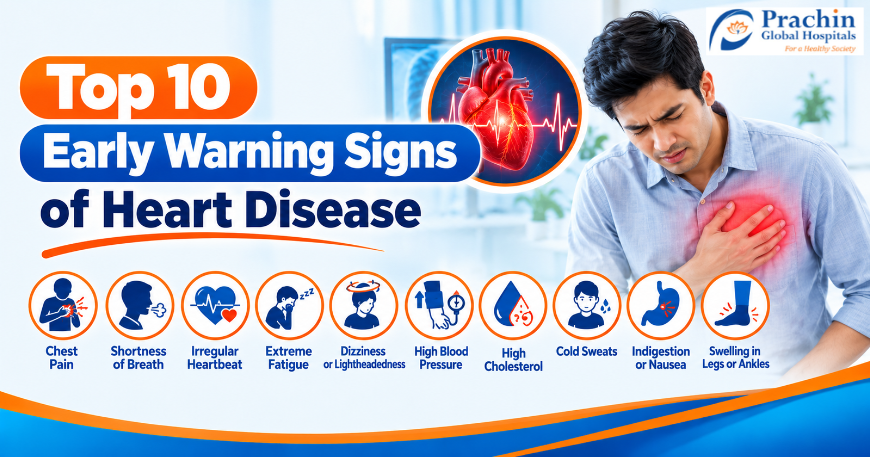
The symptoms of a heart attack are not always the same. Some people experience strong chest pain, while others notice discomfort in different parts of the body. Here are some common early signs of a heart attack that everyone should know.
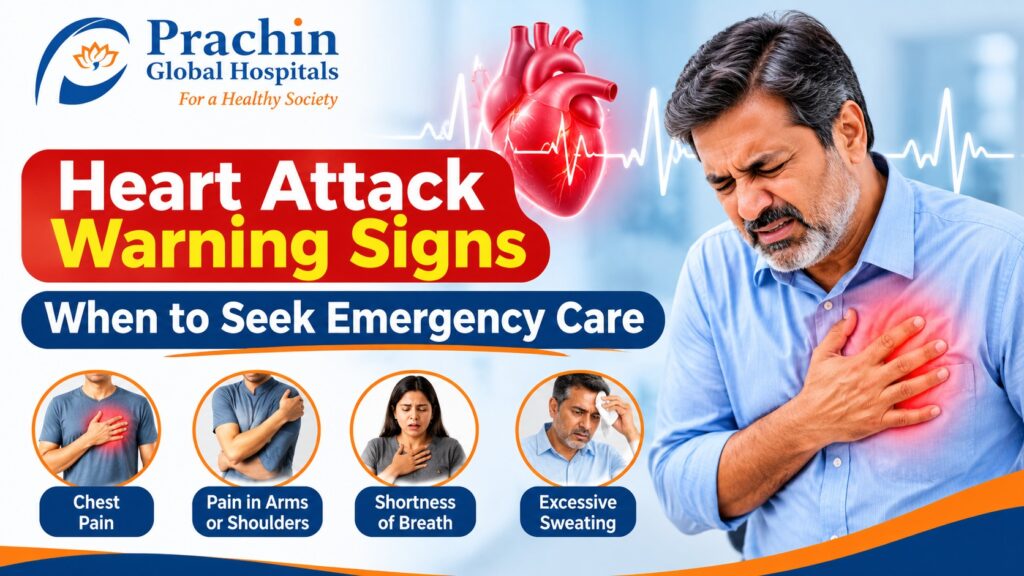
Chest discomfort is one of the most common Heart Attack Warning Signs. It may feel like someone is pressing or squeezing your chest or placing a heavy weight on it. Some people describe it as tightness rather than pain.
The discomfort may last for a few minutes or disappear and return. It usually occurs in the centre of the chest, but it should never be ignored, especially when accompanied by other symptoms.
Heart attack pain does not always stay in the chest. It can spread to one or both arms, the shoulders, neck, jaw or upper back. Some people experience heaviness or unusual discomfort in these areas.
If you suddenly notice this type of pain along with chest discomfort or breathing difficulties, seek medical attention immediately.
Finding it difficult to breathe even when you are resting can sometimes be a sign of a heart problem. Some people experience breathlessness without having noticeable chest pain.
Sudden cold sweating is another symptom that should not be overlooked. If you start sweating without physical activity or exposure to heat, particularly along with chest discomfort or dizziness, it could be a warning sign of a heart attack.
Not every heart attack feels like chest pain. Some people experience nausea, vomiting or discomfort in the upper stomach. These symptoms are often mistaken for acidity, gas or food-related problems.
If you experience unusual stomach discomfort along with sweating, breathlessness or chest pressure, do not assume it is simply indigestion. It is important to get medical help.
Feeling tired after a busy day is normal. However, sudden exhaustion without doing much physical work is different and should not be ignored.
Some people, particularly women, experience unusual tiredness or weakness before or during a heart attack. Dizziness and feeling faint may also occur. If these symptoms appear suddenly, especially along with other warning signs, seek immediate medical attention.
Many people are unaware that heart attack symptoms in men and women can be different. Although chest discomfort is common in both, some symptoms may be more noticeable in women.
Men commonly experience chest pressure, pain spreading to the arms, sweating and shortness of breath. Women can experience these symptoms too, but they may also notice unusual tiredness, nausea, back pain, jaw discomfort or dizziness.
For this reason, women should not wait for severe chest pain before seeking medical attention. Even symptoms that seem mild or unusual can sometimes point to a serious heart problem.
It is important to remember that every person experiences symptoms differently. If something feels unusual, getting medical help is always safer than ignoring it.
A heart attack can affect people of different ages. However, certain health conditions and everyday habits can increase the chances of developing heart disease.
High blood pressure and high cholesterol are two important risk factors. When blood pressure remains high for a long time, it can damage the blood vessels. Similarly, too much bad cholesterol can build up inside the arteries and make it harder for blood to flow freely.
People with diabetes also have a higher risk of heart problems, particularly when their blood sugar levels are not well controlled. Smoking, being overweight and not getting enough physical activity can further increase the risk.
Family history also matters. If close family members have experienced heart disease, especially at a younger age, it is important to discuss your own heart health with a doctor.
Knowing the symptoms is important, but knowing how to respond can make an even bigger difference. If you or someone around you experiences symptoms that may indicate a heart attack, do not wait for the pain to become severe or disappear on its own. Call emergency services immediately by dialling 112 or 108 in Telangana.
While waiting for medical help, ask the person to stop all physical activity and rest comfortably. Do not allow them to drive themselves to the hospital. Stay with them and follow the instructions given by the emergency team. Do not give medicines, including aspirin, unless advised by a medical professional or emergency dispatcher. If the person becomes unconscious and is not breathing normally, begin CPR and use an AED if available, following emergency guidance.
Patients can consult Dr. B. Rakesh Kumar at Prachin Global Hospitals for expert cardiac consultation, diagnosis and treatment. His experience and expertise in interventional cardiology support patients in managing various heart-related conditions.
Taking care of your heart does not always require major lifestyle changes. Small habits followed regularly can help improve your overall health and reduce the risk of heart disease.
Staying physically active is equally important. Regular walking, cycling or other suitable exercises can help keep your heart healthy. If you already have a heart condition or other health concerns, speak with your doctor before starting a new exercise routine.
Avoid smoking and tobacco products, as they can damage your blood vessels and increase the risk of heart problems. Getting enough sleep, managing stress and maintaining a healthy weight are also important.
Do not forget regular health check-ups. Checking your blood pressure, cholesterol and blood sugar levels can help identify possible problems early, even when you feel perfectly healthy.
Chest pain, sudden sweating, breathing difficulties and pain spreading to the arms, jaw or back should never be taken lightly.
If you experience symptoms that could indicate a heart attack, call emergency services immediately. Do not wait for a regular doctor’s appointment, even if the discomfort seems mild or goes away after a few minutes.
People with diabetes, high blood pressure, high cholesterol or a family history of heart disease should also discuss their heart health with a healthcare professional. Regular check-ups can help identify risk factors and guide the right steps for better health.
If you are looking for medical guidance or information about available healthcare services, visit Prachin Global Hospitals.
Your heart health should never be ignored. Recognising Heart Attack Warning Signs, understanding the symptoms and seeking medical attention at the right time can make a life-saving difference.
If you are concerned about your heart health or experiencing symptoms that need medical attention, reach out to Prachin Global Hospitals in Patancheru, Hyderabad for healthcare guidance and information about available medical services.
Don’t wait until a health concern becomes serious. Take the right step towards better heart health today.
Contact Today! Prachin Global Hospitals to enquire about appointments and available healthcare services.
Heart attack symptoms can vary from person to person. Some may experience chest pain or tightness, while others notice sweating, breathlessness, nausea or discomfort in the arms, back, neck or jaw. Unusual tiredness and dizziness can also be warning signs, so never ignore these symptoms.
Yes. Some people experience a silent heart attack without noticeable chest pain. They may experience breathlessness, nausea, unusual fatigue, indigestion-like discomfort or back pain. People with diabetes and older adults may be more likely to experience less typical symptoms. Medical evaluation is essential when unexplained symptoms develop.
Common risk factors include high blood pressure, high cholesterol, diabetes, smoking, obesity, physical inactivity and an unhealthy diet. Age and family history also influence risk. Regular health check-ups and appropriate lifestyle changes can help identify and manage many of these factors.
Heart attack symptoms may last several minutes or longer. They can also disappear temporarily and return. Some people experience gradual discomfort rather than sudden severe pain. Never wait for symptoms to become intense or persistent before seeking emergency medical attention.
Call emergency services immediately. Help the person sit comfortably, keep them calm and follow the emergency operator's instructions. Do not allow them to drive themselves to hospital. If they become unresponsive and stop breathing normally, begin CPR if trained and use an AED if available.
WhatsApp us