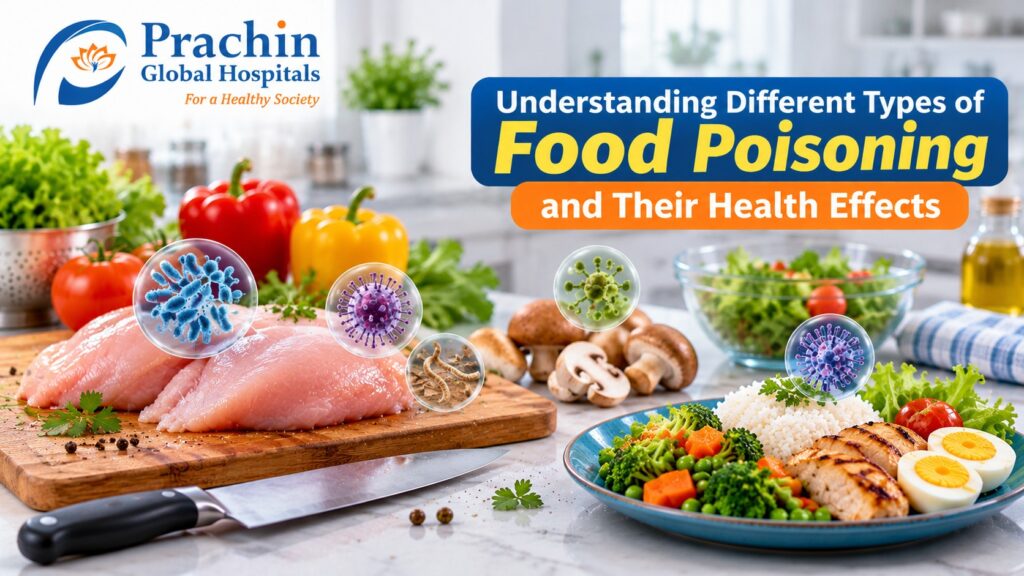


Food poisoning can cause mild symptoms for a short amount of time, or serious illness requiring hospital treatment. Different causes of food poisoning will cause different symptoms, at different times and may require different treatments.
Symptoms of food poisoning (foodborne illness) can occur following ingestion of contaminated food or drink. From symptoms alone, it can be difficult to know the specific cause of illness.
Food can get contaminated at multiple stages including during production, transport, storage, cooking and serving. Contamination can occur due to under-cooking, incorrect storage temperatures, washing in contaminated water, or poor personal hygiene.
Cross-contamination can occur from raw foods to ready-to-eat foods via tools or surfaces. Learn more about Food Safety and ways to prevent food contamination
Symptoms can include diarrhoea, abdominal pain, nausea, vomiting and fever. Depending on the cause of the infection, symptoms can develop very quickly, or may take days to develop. Therefore, it may be difficult to determine what meal caused the illness as the incubation period varies depending on the cause.
Incorrect storage/ handling of food, or consumption of contaminated ingredients can cause bacterial food poisoning.
Viral food poisoning can come from contaminated foods (by infected staff), water or surfaces.
Illness can be caused by parasites such as Giardia, Cryptosporidium, and Cyclospora found in contaminated water, fruit/vegetables, meat or fish. Symptoms can include long-term diarrhoea, bloating, abdominal pain, nausea and weight loss.
Chemical contamination, cleaning product residue, natural toxins, or poisonous mushrooms in food can cause illness. Some toxins in fish and shellfish can cause problems with the nervous system. If you experience blurry vision, tingling, trouble swallowing, muscle weakness, or breathing issues, seek emergency help.
Vomiting and diarrhoea can cause dehydration. Signs of dehydration include extreme thirst, dry mouth, little dark urine, dizziness and unusual tiredness.
In severe cases, blood in stools, kidney damage, liver inflammation or neurological issues may occur. In particular young children, the elderly, pregnant individuals and those with compromised immune systems are at higher risk. Medical advice should be sought early.
For more information about digestive health and related conditions, explore our Digestive Health Services
If symptoms are mild, rest and hydration may be sufficient. However, seek medical advice if:
Consider earlier medical support in children, elderly, pregnant individuals, and individuals with chronic illness. Your clinician may wish to perform tests on your stools or blood. Rehydration, either orally or via IV, may occur, depending on severity. Specific medications may be given. Not all infections can be treated with antibiotics. Only take antibiotics if advised to by a clinician.
To rehydrate, sip small amounts of safe water or an oral rehydration solution (ORS) regularly. Eat small amounts of easily tolerated food once feeling more like eating. If you are unwell, do not cook food for others. Wash hands after going to the toilet.
Do not take antibiotics or medication to treat diarrhoea unless advised to. This is especially important if you have a high temperature, or blood in diarrhoea. In children, special care must be taken as dehydration can occur very quickly.
Taking steps in your kitchen can reduce the risk of developing foodborne illness:
Extra care should be taken with cooked rice, gravies, buffet-style foods, and pre-packaged foods that have been left in a warm environment. Just because food smells or looks okay, does not mean it is safe to eat. Follow these Food Safety Practices to reduce the risk of food contamination and foodborne illnesses.
Different causes of food poisoning can lead to different symptoms and complications. If you experience persistent diarrhoea, repeated vomiting, dehydration or severe abdominal pain, seeking medical advice is important.
At Prachin Global Hospitals, patients can access healthcare services for digestive system and liver-related conditions. If you are experiencing persistent or severe symptoms, consult our healthcare team for proper evaluation and treatment.
Need Medical Assistance? Contact Prachin Global Hospitals for professional healthcare support and guidance.
The main types of food poisoning include bacterial, viral, parasitic and chemical or natural toxin-related illnesses. Common causes include Salmonella, E. coli, Norovirus and Giardia, which can cause different symptoms and health complications.
Common food poisoning symptoms include diarrhoea, vomiting, nausea, abdominal pain, stomach cramps and fever. Some people may also experience dehydration, weakness and dizziness, depending on the severity of the infection.
Food poisoning can last from a few hours to several days, depending on the organism responsible. Some bacterial and parasitic infections may persist longer and require medical treatment.
Visit a hospital if you experience bloody diarrhoea, severe abdominal pain, persistent vomiting, high fever or signs of dehydration. Young children, older adults and pregnant individuals should seek medical advice early
Food poisoning can be prevented by washing hands regularly, cooking food thoroughly, storing food at safe temperatures, drinking clean water and avoiding cross-contamination between raw and cooked foods.
WhatsApp us